
What Is the ADI Part 2 Test?
What Is the ADI Part 2 Test? Everything You Need to Know
The ADI Part 2 test is the second stage of the qualification process set by the Driver and Vehicle Standards Agency (DVSA). Unlike the ADI Part 1 theory test, this assessment focuses on your practical driving ability and your ability to demonstrate a high standard of safe, confident and controlled driving.
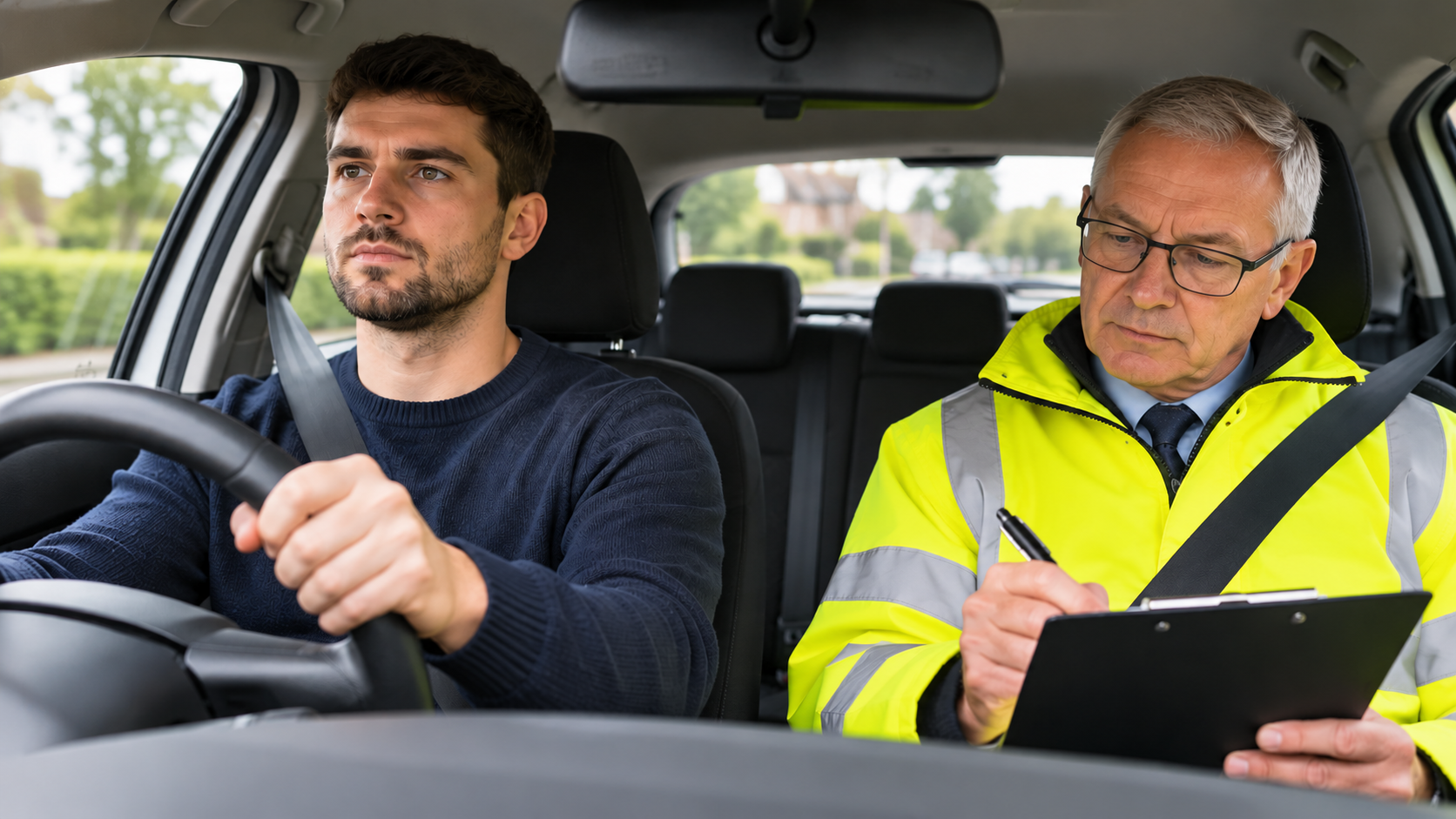
Preparing for your ADI Part 2 test
What Does the ADI Part 2 Test Involve?
The ADI Part 2 test is designed to assess whether you can drive to the high standard expected of a professional driving instructor.
The test lasts approximately one hour and includes five main elements:
Eyesight check
Vehicle safety questions (show me, tell me)
General driving ability
Reversing manoeuvres
Independent driving
You’ll need to demonstrate excellent vehicle control, good observation, forward planning and sound judgement throughout the assessment.
1. The Eyesight Check
At the beginning of your test, the examiner will ask you to read a vehicle registration number plate from a distance.
You must be able to read:
27 metres for a new-style number plate.
27.5 metres for an old-style number plate.
If you fail the eyesight check, you will fail the test and won’t continue with the driving assessment.
2. Show Me, Tell Me Vehicle Safety Questions
You’ll be asked five vehicle safety questions to demonstrate your knowledge of basic vehicle checks and maintenance.
These are divided into:
Three ‘tell me’ questions before you start driving.
Two ‘show me’ questions while you’re driving.
A tell me question might ask you how you would check that your tyres have sufficient tread depth.
A show me question could ask you to demonstrate how you would wash the windscreen using the vehicle’s controls.
It’s important to understand these checks rather than simply memorise the answers. You need to know how to carry them out safely and confidently.
3. General Driving Ability
This is a major part of the ADI Part 2 assessment.
You’ll need to demonstrate a high standard of driving across different road and traffic conditions.
The examiner will assess:
Smooth and controlled use of the vehicle’s controls.
Correct road positioning and lane discipline.
Effective use of mirrors.
Good anticipation and awareness of hazards.
Safe judgement of speed, distance and timing.
Correct responses to road signs and traffic signals.
Consideration for other road users.
Environmentally friendly driving.
You may drive on a variety of roads, including dual carriageways or motorways where possible. You may also be asked to carry out an emergency stop.
4. Reversing Manoeuvres
You’ll be asked to complete two reversing exercises from the following four options:
Parallel parking at the side of the road.
Reversing into a parking bay and driving out.
Driving into a parking bay and reversing out.
Pulling up on the right-hand side of the road, reversing for around two car lengths and rejoining traffic.
The examiner will assess your control, accuracy, observation and awareness of other road users.
Remember, good observation is just as important as completing the manoeuvre correctly. You must remain aware of your surroundings throughout.
5. Independent Driving
You’ll be required to drive independently for approximately 20 minutes.
The examiner will ask you to follow either:
Directions from a sat nav.
Traffic signs to reach a particular destination.
This section assesses your ability to make safe decisions, plan ahead and maintain good driving standards without relying on step-by-step instructions.
If you take a wrong turn, don’t panic. The important thing is to remain safe and continue driving responsibly.
Why Choose Road Pilot Driver Training?
Build the confidence, control and driving ability needed to meet the high standards expected of an Approved Driving Instructor.
Improve your observation, positioning, manoeuvres and hazard awareness to help you prepare for your ADI Part 2 assessment.
Get ready for the next stage of your journey towards becoming a fully qualified driving instructor.
What Is the Pass Mark for ADI Part 2?
The ADI Part 2 test has a strict pass requirement.
To pass, you must achieve:
No more than six driving faults.
No serious faults.
No dangerous faults.
A driving fault is a minor mistake that is not potentially dangerous. However, repeatedly making the same mistake could result in a more serious fault.
A serious fault is something that could potentially be dangerous, while a dangerous fault involves actual danger to yourself, the examiner, other road users or property.
You must demonstrate a consistently high standard of driving throughout the assessment.
How Can You Prepare for the ADI Part 2 Test?
Preparation is key to giving yourself the best chance of success.
We have prepared this guide of some important tips to help you get ready:
1. Practise with a registered ADI trainer
Working with an experienced, registered trainer can help identify areas where you need to improve and prepare you for the standard expected by the DVSA.
2. Work on your observation and planning
Developing good awareness of other road users and potential hazards is essential. Practise anticipating situations early rather than reacting at the last moment.
3. Perfect your manoeuvres
Make sure you can complete all four reversing exercises confidently, safely and accurately.
4. Revise your vehicle safety questions
Know your show me, tell me questions and understand how to carry out each check correctly.
5. Develop consistency
Passing isn’t just about having one good drive. You need to demonstrate a consistently high standard across different road and traffic conditions.
What Happens After Passing ADI Part 2?
Passing your ADI Part 2 test means you’re one step closer to becoming a fully qualified driving instructor.
Once you’ve passed, you can choose to:
-
Apply for a trainee driving instructor licence, subject to meeting the requirements.
-
Continue your training towards the ADI Part 3 instructional ability test.
The Part 3 test assesses your ability to teach learner drivers effectively and safely.
Remember, you must complete the qualification process within two years of passing your ADI Part 1 test.
Get in Touch with Road Pilot
FAQ
Your Questions, Answered
Yes, you can use your own car for the ADI Part 2 test, provided it meets all the DVSA vehicle requirements.
Your vehicle must be roadworthy, have no relevant dashboard warning lights showing, and have tyres that meet the legal requirements. It must also have an additional interior rear-view mirror for the examiner, a suitable passenger seat, seatbelt and head restraint.
If you’re using your own vehicle, it must also be taxed, have a valid MOT if it’s more than three years old, and be insured specifically for an ADI Part 2 test.
It’s worth checking everything well in advance of your assessment. If your vehicle doesn’t meet the DVSA requirements, your test could be cancelled and you may lose your booking fee.
Before attending your ADI Part 2 test, make sure you have the correct documentation.
You must bring your valid UK driving licence and provide a suitable vehicle that meets the DVSA requirements.
If you have an old-style paper driving licence rather than a photocard licence, you’ll also need to bring a valid passport.
It’s important to check that you have everything ready before travelling to the test centre. If you arrive without the required documents, your test will be cancelled and you won’t receive a refund.
Yes, you can take your ADI Part 2 test in either a manual or automatic car, depending on the type of driving licence you hold.
If you have a full manual driving licence, you can choose to take your assessment in either type of vehicle. Passing in either type will allow you to train learners in both manual and automatic cars.
However, if you hold an automatic-only driving licence, you’ll need to take your ADI Part 2 test in an automatic vehicle. Once qualified, you’ll only be permitted to provide driving instruction in automatic cars.
Think carefully about the type of driving instruction you want to offer when choosing your assessment vehicle.
No, if you’re using your own suitable vehicle for the ADI Part 2 test, dual controls are not required.
However, if you choose to use a hire car, it must have dual controls fitted and meet the other DVSA vehicle requirements.
This is an important distinction to understand when arranging your test vehicle. Make sure you confirm the vehicle’s suitability and insurance arrangements before booking or attending your assessment.
Yes, some vehicle assistance features are permitted during the ADI Part 2 assessment.
You can use features such as parking sensors, reversing cameras, cruise control, hill-start assist, lane assistance and blind spot monitoring, where fitted.
However, there are restrictions. You cannot use your own sat nav during the test, and features such as self-parking and Tesla Autopilot must not be used.
If sat nav is required for your independent driving section, the examiner will provide and set up the device for you.
Remember, the examiner needs to assess your own driving ability, judgement and control, so you must remain responsible for all driving decisions.
Yes, you can use a hire car for your ADI Part 2 test, provided it meets the DVSA requirements.
The hire vehicle must have dual controls fitted, be roadworthy and have the appropriate insurance for the assessment.
It must also have a suitable passenger seat, head restraint, seatbelt and additional interior rear-view mirror for the examiner.
Before arranging a hire car, check that the provider specifically allows its vehicle to be used for an ADI Part 2 test. Not every standard hire vehicle will meet the necessary requirements.
Organising your vehicle in advance can help avoid unnecessary problems on test day.
If your vehicle does not meet the DVSA requirements, your ADI Part 2 test may be cancelled and you’ll have to pay to book another appointment.
Common problems include dashboard warning lights, damaged tyres, unsuitable passenger seating, missing head restraints or an inadequate additional interior mirror.
Your vehicle must also have the correct insurance for the assessment, along with valid road tax and an MOT where required.
To avoid disappointment and additional costs, check your vehicle thoroughly before test day. If you’re unsure whether your car is suitable, contact the DVSA before your appointment.
The DVSA can cancel or stop an ADI Part 2 test if weather conditions make driving unsafe.
Conditions such as icy roads, flooding, thick fog and high winds can prevent the assessment from going ahead.
If the DVSA cancels your test because of dangerous weather, it will normally arrange another appointment automatically and send you the new details within three working days. This can take up to seven days following a prolonged period of bad weather.
You can change the replacement appointment if the date is unsuitable.
If you’re concerned about the weather on your test day, contact your test centre using the telephone number provided in your booking confirmation.
Remember that weather-related cancellations are different from cancellations caused by problems with your own vehicle or personal circumstances.
Explore Your Options