
Reverse Bay Parking Tips for Your Driving Test
Here are some useful tips to help you get more confident with reverse bay parking.
Reverse bay parking is one of the manoeuvres you may be asked to complete during your practical driving test. For many learner drivers, it can feel a little daunting at first, but with the right technique and plenty of practice, it can become much easier.
The key is to take your time, keep good control of the car and remember that accuracy is more important than speed.
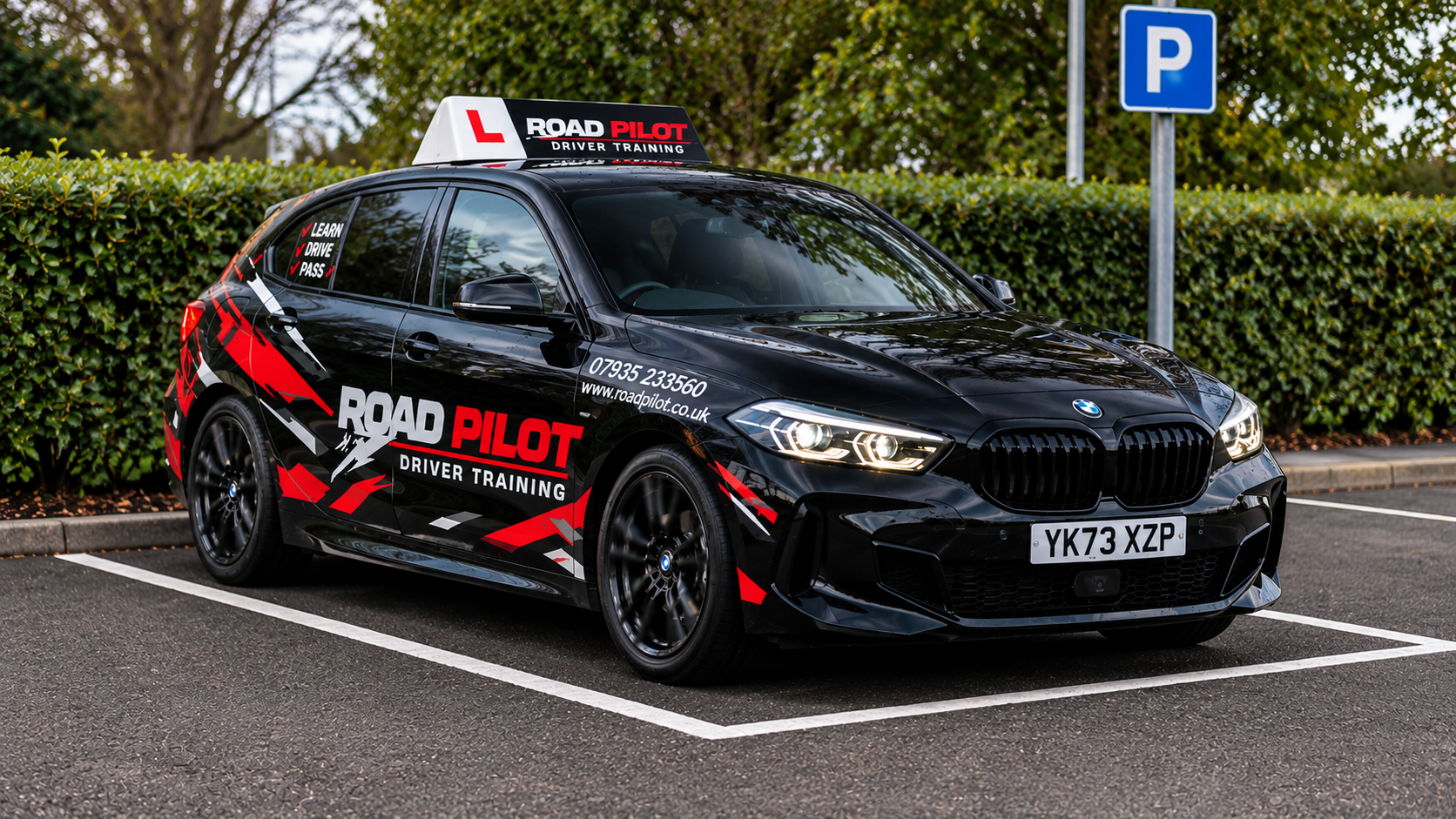
Reverse Bay Parking Made Easy - Road Pilot
Choose Your Reference Point
Before starting the manoeuvre, make sure you understand where you need to position your car.
A useful starting point is to drive past the bay you intend to reverse into, leaving enough room to manoeuvre safely. Your instructor can help you identify suitable reference points for the vehicle you’re learning in.
Remember, every car is slightly different, so it’s important to practise using the same vehicle you’ll be taking your test in.
Take Your Time
One of the biggest mistakes learners make is rushing the manoeuvre.
There is no need to reverse quickly. Move slowly enough that you have time to check your surroundings, adjust your steering and keep the car under control.
If you feel you’re getting too close to a white line, stop and reassess your position before continuing.
Use Your Mirrors and Look Around
Observation is a big part of reverse bay parking.
Before moving, check all around the vehicle for pedestrians, other cars and anything that could become a hazard.
While reversing, continue checking your mirrors and looking in the direction you’re travelling. Don’t rely on your mirrors alone.
Your examiner will be looking for effective observations throughout the manoeuvre, not just at the beginning.
Why Choose Road Pilot Driver Training?
Learn a reliable reverse bay parking technique with expert guidance.
Build better awareness, vehicle control and confidence when reversing.
Practise essential parking manoeuvres and develop the skills needed for test day.
Keep an Eye on the White Lines
Try to keep the vehicle positioned centrally within the parking bay.
Use your door mirrors to monitor the white lines on either side of the car. If you notice that you’re getting too close to one side, make a small steering adjustment.
Avoid making sudden or excessive steering movements, as these can make it harder to keep the vehicle straight.
Don't Be Afraid to Correct Your Position
You are allowed to make adjustments during reverse bay parking.
If you find yourself slightly off-centre or not positioned correctly, stop safely and take another look before correcting your position.
A controlled correction is much better than continuing into the bay when you know the car isn’t positioned properly.
The important thing is to maintain good observations and make sure your adjustments are safe.
Finish Within the Bay
Once you’ve reversed into the space, make sure the car is positioned neatly within the bay.
Avoid finishing with a wheel over a white line or leaving the vehicle sticking out into the driving area.
Once you’re happy with your position, secure the car safely and wait for the examiner’s next instruction.
Common Reverse Bay Parking Mistakes
Some of the most common mistakes learners make include:
Rushing the manoeuvre instead of taking their time.
Not checking all around the vehicle before reversing.
Relying too heavily on mirrors without looking around.
Turning the steering wheel too much or too little.
Finishing too close to or over a white line.
Failing to make a correction when one is needed.
The good news is that these mistakes can usually be improved with regular practice and guidance.
Practise Reverse Bay Parking Before Your Test
The best way to improve your reverse bay parking is to practise regularly in different car parks and parking spaces.
Your Road Pilot driving instructor can help you develop a consistent technique, improve your observations and understand when adjustments are needed.
At Road Pilot Driver Training, we help learner drivers build the skills and confidence needed to approach their practical driving test with a positive attitude.
Whether you’re learning around Wigan, St Helens or the surrounding areas, getting comfortable with manoeuvres such as reverse bay parking is an important part of becoming a safe and confident driver.
Looking to improve your driving skills before your test? Get in touch with Road Pilot Driver Training to find out how we can help if your learning to drive manual or automatic driving lessons
Get in Touch with Road Pilot
FAQ
Your Questions, Answered
Yes. You can receive a driving fault or a serious or dangerous fault depending on what happens during the manoeuvre. For example, poor control, inadequate observations or creating a risk to other road users could affect your result.
You should follow the examiner’s instructions. If you are asked to reverse into a bay of your choice, you can select a suitable space, provided it is safe and appropriate for the manoeuvre.
Yes. Reference points can help you judge when to steer and how to position the vehicle. However, they should support your observations rather than replace them. Remember that reference points can vary between different vehicles.
You should be prepared to stop and allow other vehicles or pedestrians to pass safely. The examiner wants to see that you can recognise potential hazards and respond appropriately without rushing the manoeuvre.
No. Your parking does not have to be absolutely perfect, but you must demonstrate safe control and effective observations. Minor imperfections do not automatically mean you will fail.
There is no set number of times you need to practise. You should aim to become consistent and confident with the manoeuvre, completing it safely without relying entirely on your instructor’s prompts.
Whether you complete reverse bay parking at the driving test centre depends on the location. Atherton test centre and St Helens driving test centre have larger car parks, allowing the manoeuvre to be carried out on-site. Chorley driving test centre has a smaller car park, so reverse bay parking is not carried out there. Instead, the examiner will use another suitable car park if this manoeuvre is selected.
Explore Your Options